The market moves.
A customer changes direction. A competitor makes a move. A new opportunity appears. A conversation reveals something important.
Someone notices it. Someone else knows something about it. Someone else has the data that explains it.
And somewhere else in the organisation, someone is still trying to figure out what to do next.
By the time everyone has the full picture, the moment may already be gone.
Maybe the problem with modern businesses isn't that they move too slowly. Maybe it's that intelligence moves too slowly.
The Information Is There. The Connection Isn’t.
Businesses today have more information than ever before.
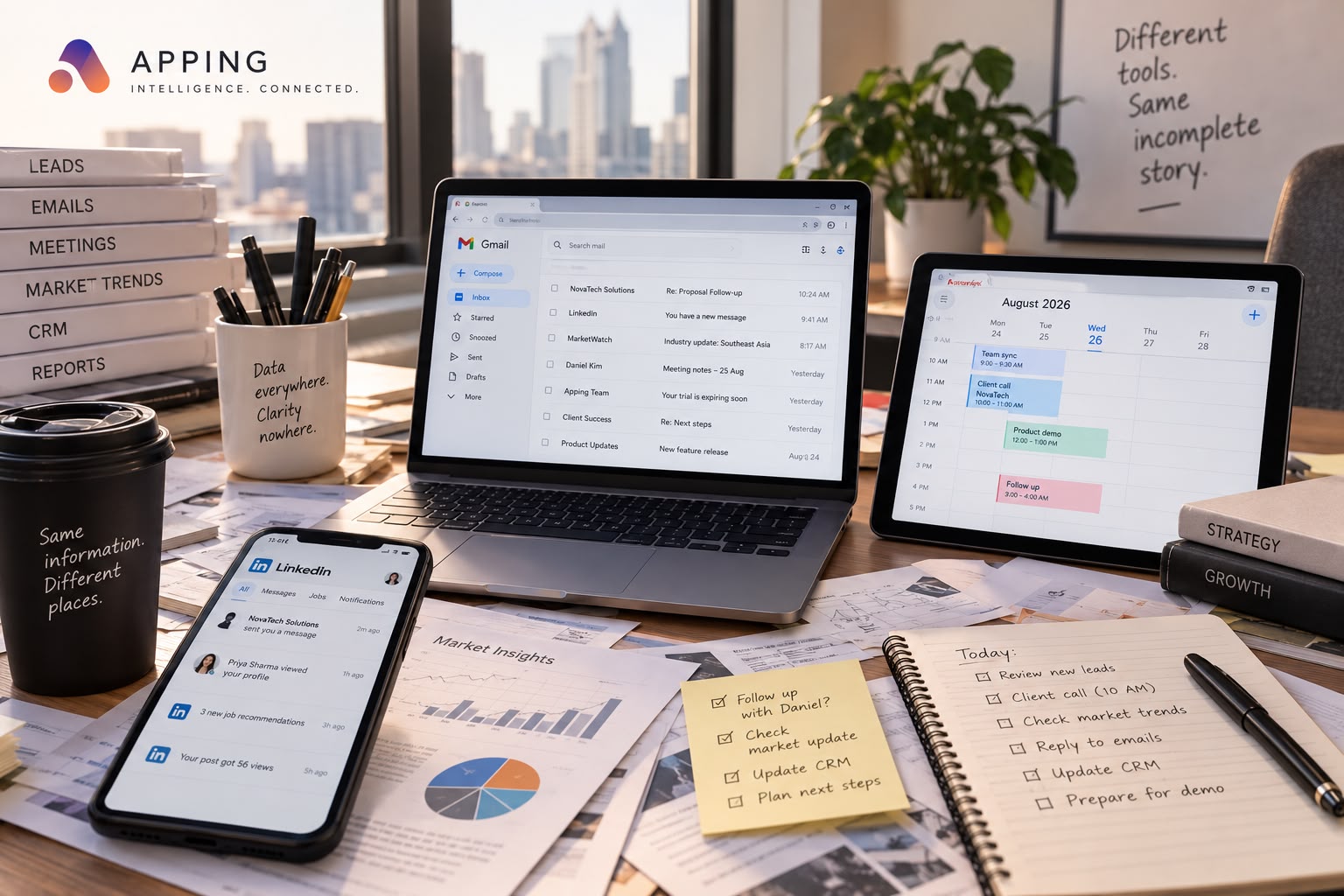
CRMs hold customer histories. Market platforms track changes. Emails contain decisions. Meeting notes contain context. Sales teams hold relationship intelligence. AI tools generate insights in seconds.
The information exists. But information sitting in different places doesn't automatically become intelligence.
A market signal might never reach the person responsible for an account. A sales conversation might reveal a customer priority that never makes its way back into the broader business context. A decision made six months ago might still be influencing today's strategy—without anyone remembering exactly why.
So teams keep doing something surprisingly expensive: they reconstruct the story.
Someone researches the company. Someone searches the CRM. Someone checks old emails. Someone asks, “Did we speak to them before?” Someone tries to remember what happened in the last meeting.
Eventually, someone pieces together enough information to make a decision.
The problem is that the business keeps having to start from somewhere close to zero.
What If Your Business Could Remember?
Imagine a different kind of business system.
One where information doesn't simply get stored. It travels.
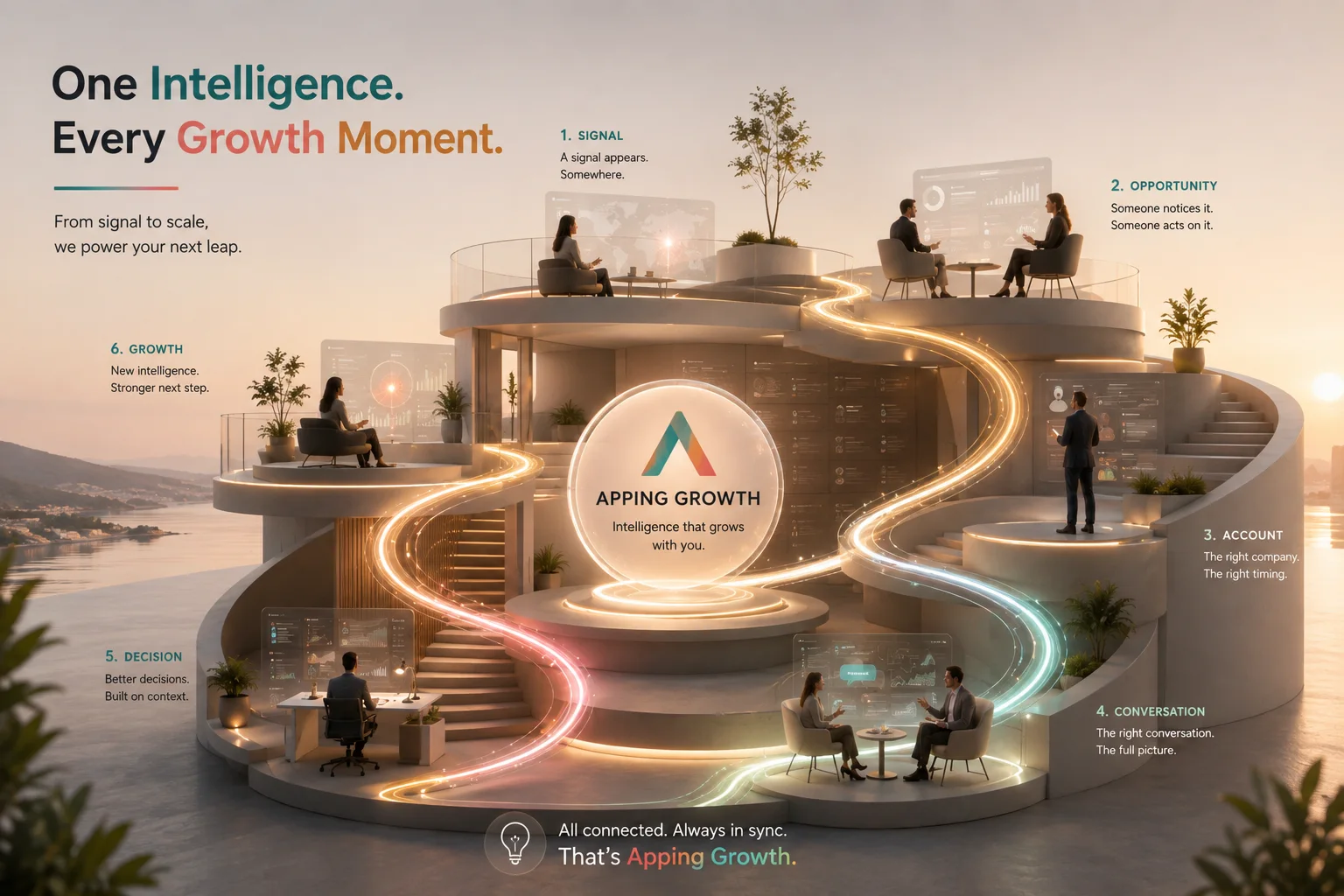
A market change becomes relevant to an account. That account becomes relevant to a person. That person becomes part of a conversation. That conversation creates new intelligence. And that new intelligence influences what happens next.
Nothing disappears when the next stage begins. The context comes with it.
The business stops operating as a collection of separate moments and starts operating as a continuous story.
Because growth rarely happens in isolated events. It happens through a chain of signals, decisions, interactions and reactions.
The more connected that chain becomes, the less time teams spend reconstructing what happened—and the more time they can spend deciding what should happen next.
AI Was Never Supposed to Be Just Faster Fingers
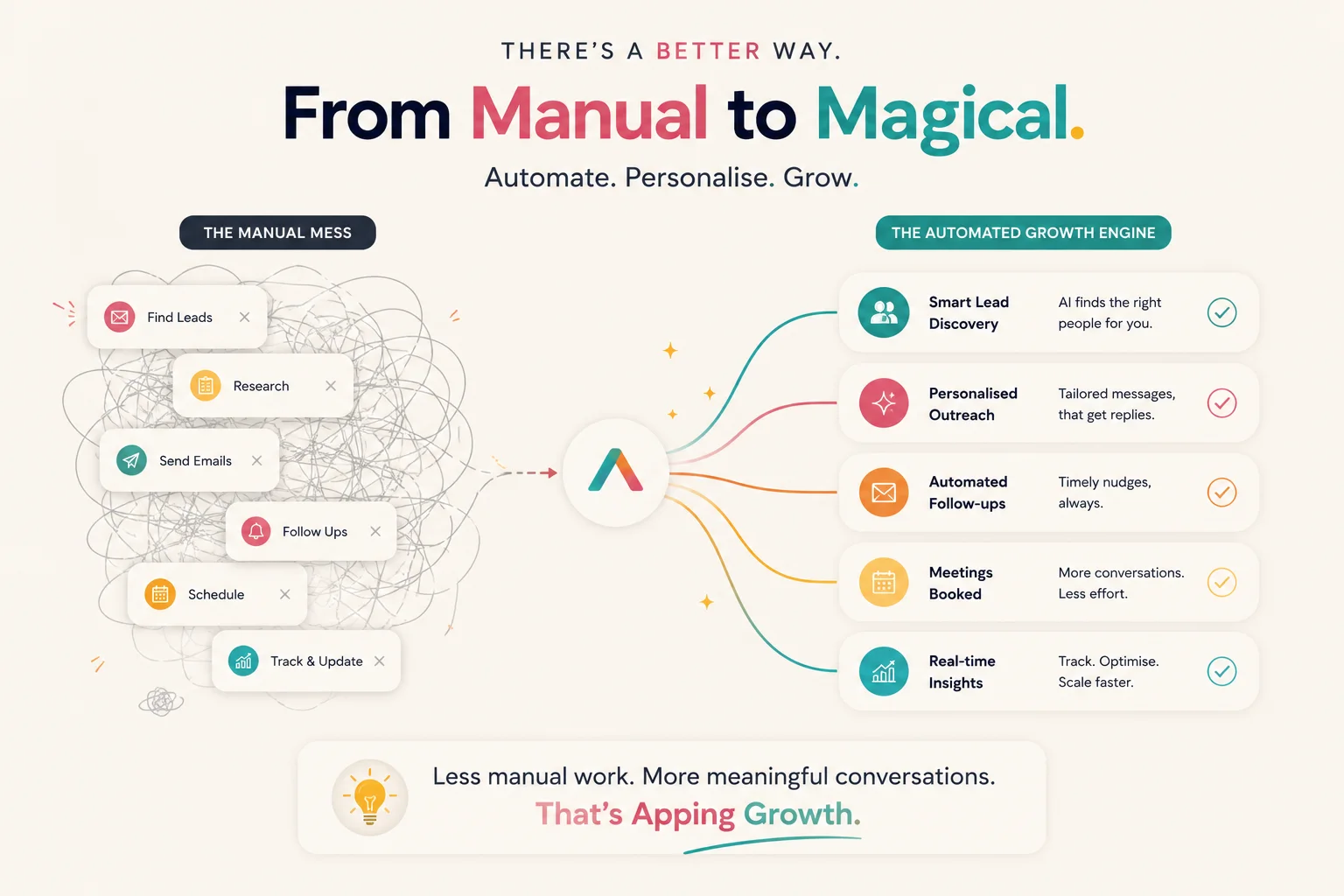
The first wave of business AI was largely about doing things faster.
Write this. Summarise that. Find this. Generate that. Automate this.
And that is useful.
But there is a bigger opportunity hiding underneath it.
What happens when AI doesn't just complete a task, but understands the context surrounding the task?
Because knowing what happened is different from knowing why it matters.
A company hiring aggressively is a data point. Understanding what that hiring could signal about its priorities—and how that might connect to your business—is context.
A customer mentioning a problem in a meeting is information. Understanding how that problem connects to previous conversations, account history and future decisions is intelligence.
The difference is subtle. But the impact can be enormous.
This Is Where Apping Comes In
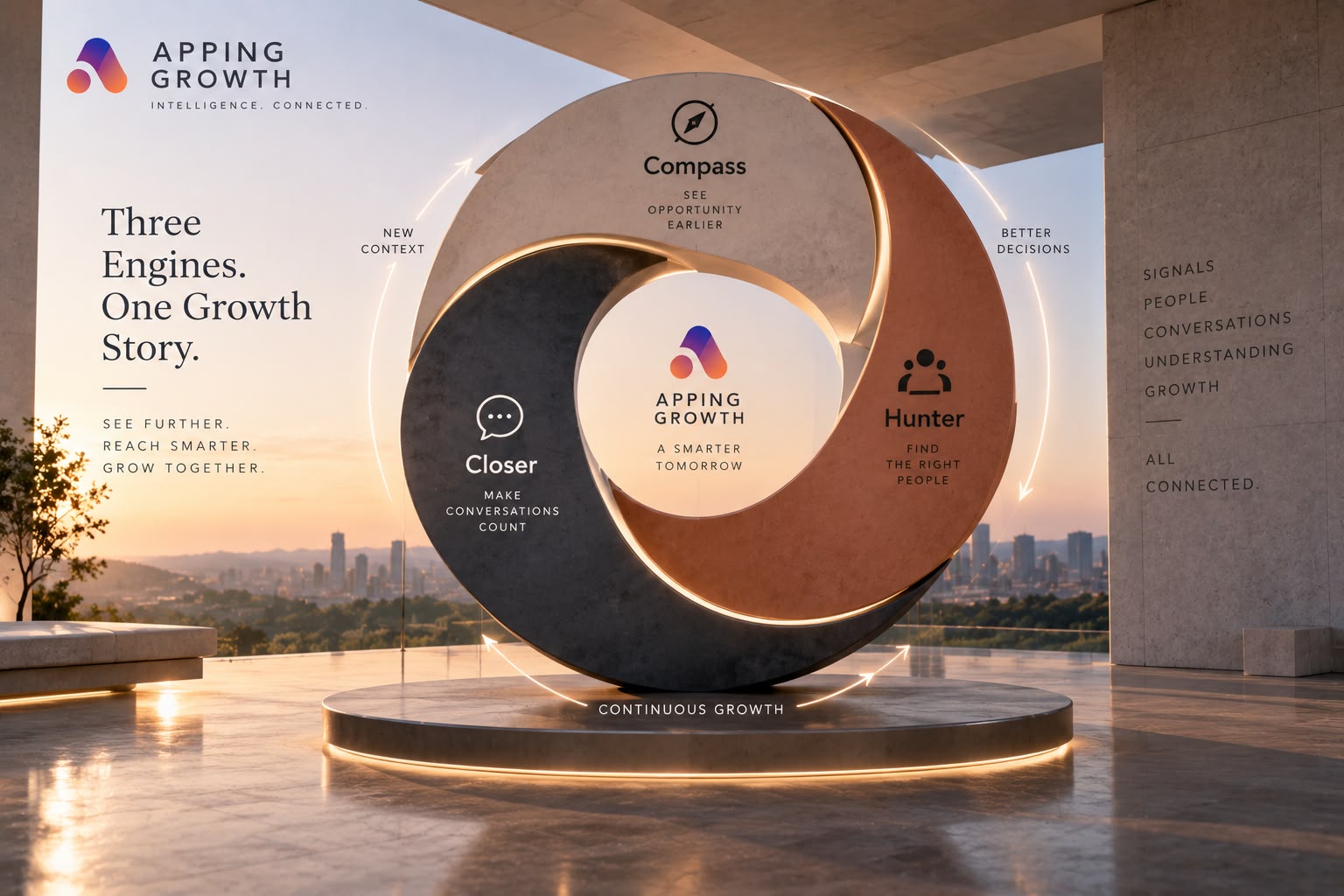
Apping is built around a simple idea: your business shouldn't have to keep rediscovering what it already knows.
Instead of treating intelligence as isolated outputs, Apping approaches it as a connected layer across the go-to-market journey.
The objective isn't to give teams another place to look. It's to make the information they already depend on more connected, more contextual and more useful.
When context moves with the work, decisions can become more informed.
And when every interaction adds to that context, intelligence doesn't disappear. It compounds.
From Information to Continuity
Think about what happens when a business doesn't forget.
The market changes—and the business understands what that could mean. An account becomes relevant—and the team understands why. A conversation happens—and its intelligence doesn't remain trapped in a meeting note. A decision is made—and the reasoning behind it doesn't disappear six months later.
The next person doesn't have to ask for the entire backstory. They inherit the context.
This is more than automation. It is continuity.
And continuity could become one of the most valuable advantages in an AI-powered business.
Because while everyone is racing to generate more information, the real advantage may belong to the companies that can connect what they already have.
The Intelligence Layer Behind Growth
Markets don't wait for teams to finish reading dashboards. Customers don't pause while information moves between systems. Opportunities don't politely remain available until everyone has caught up.
Everything is moving at once.
That means the future of intelligent business systems may not be about having the biggest database, the most dashboards, or even the most AI features.
It may be about something much simpler: How quickly can your business turn scattered information into shared understanding?
That is the shift Apping is building toward.
From disconnected information to connected intelligence. From repeatedly searching for answers to building on what the business has already learned. From isolated AI tasks to a system where context can move through the journey.
And ultimately, from a business that simply collects information... to one that learns from it.
The Business That Doesn’t Start From Zero
Every company has a memory.
It's hidden inside customer conversations, market movements, decisions, emails, accounts, relationships and thousands of small interactions.
The problem is that most businesses don't experience that memory as one connected thing.
Apping is building toward a different future.
A future where the intelligence created today can make tomorrow's decision smarter. Where context doesn't get lost between teams. Where every interaction can become part of a larger understanding.
Where AI doesn't simply help businesses work faster—it helps them remember better, understand deeper and act with more context.
Because the next competitive advantage may not be having more information. It may not even be having better AI.
It may be having a business where intelligence never has to start from zero again.
Apping. Less fragmentation. More context. Smarter growth.